This post contains affiliate links, which means I may earn a small commission if you purchase through them - at no extra cost to you. I only share products I personally use and love.
The Sleepless Beginning
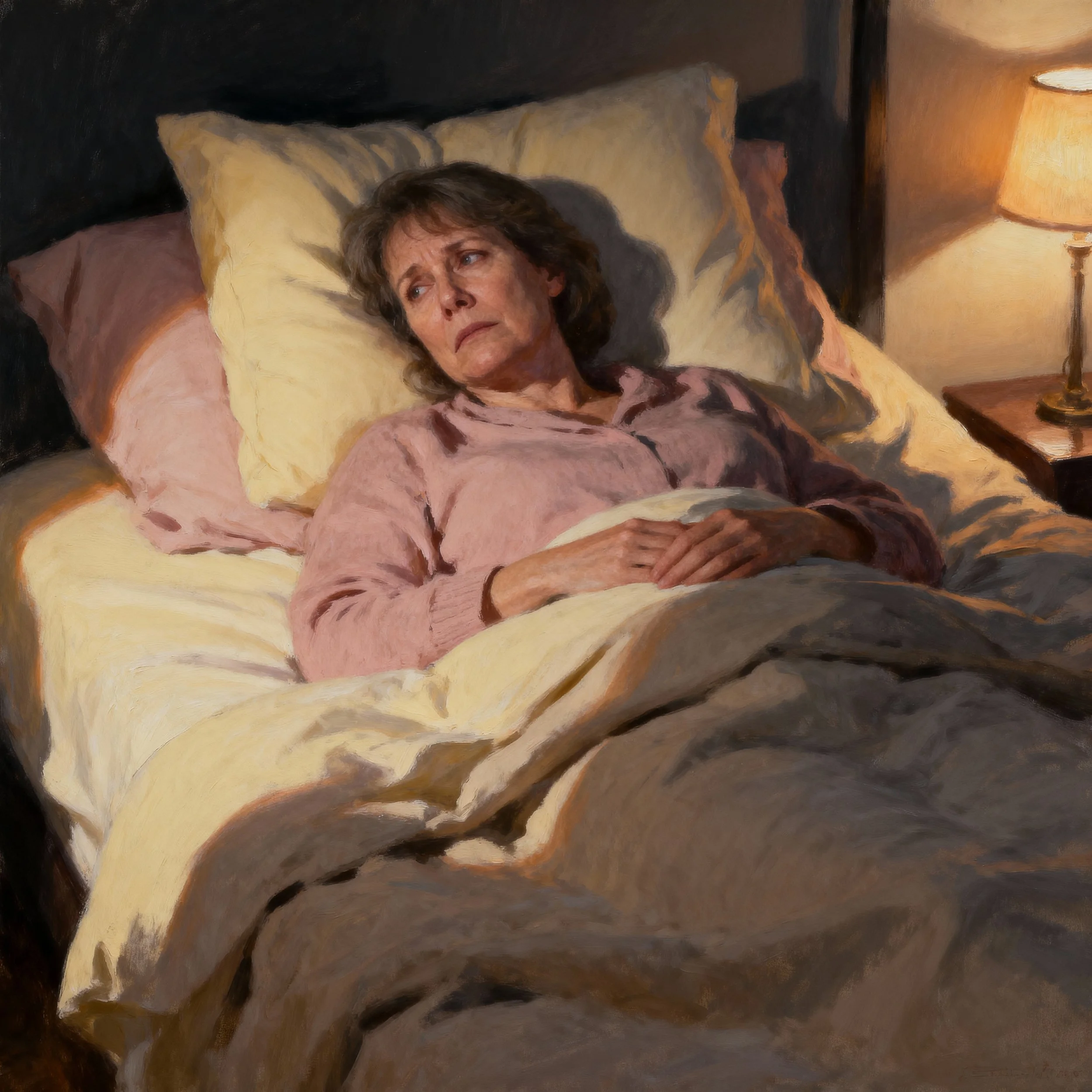
My first real sign that perimenopause had arrived wasn’t hot flashes or mood swings, it was the sudden, almost unbelievable inability to sleep. For about three to four months, I slept maybe two hours a night. It didn’t matter how tired I was; my body just refused to shut down. I’d lie awake for hours, restless and wired, wondering what was happening.
What made it worse was knowing what chronic sleep deprivation does to the body. When you don’t sleep, cortisol levels rise, the body’s built-in stress hormone. Elevated cortisol disrupts glucose metabolism, increases abdominal fat storage, and heightens inflammation - all of which contribute to the dreaded “menobelly.”
It was frustrating because I was doing everything “right”: exercising, eating balanced meals, trying to manage stress. But without rest, nothing else seemed to matter. I remember staring at the ceiling at 2 a.m., feeling my heart beat faster as my brain spun through everything I couldn’t fix, the irony being that what I needed most was the one thing my body refused to give me: rest.
You’re Not Alone — The Stats Back It Up
When I started talking to friends, I realized I wasn’t the only one pacing the house at night. One friend texted me back at 3 a.m. - “Oh good, you’re up too.” There’s a quiet solidarity among women awake in the middle of the night, each of us trying to figure out what changed.
According to multiple studies, 40% to over 60% of women report sleep problems during the menopausal transition. The SWAN Study (Study of Women’s Health Across the Nation) highlights how sleep issues are not only common, but often one of the most disruptive symptoms of midlife.
By stage:
Perimenopause (transition phase): ~40%–56% of women struggle with sleep. This stage can feel like a hormonal rollercoaster, unpredictable cycles, mood swings, and suddenly, the body’s entire rhythm feels “off.”
Postmenopause: Between 52%–64% of women report persistent insomnia or poor sleep quality. Even when the hot flashes fade, the disrupted sleep often lingers.
So if you’re wondering whether it’s “just you,” it’s not. Sleep disturbance is one of the most common and persistent menopausal symptoms, one that ripples into every other aspect of health.
Why It Happens — The Science Behind the Sleeplessness
The short answer: hormones. The longer one? Hormones and the way they interact with your brain, your nervous system, and your body’s natural clock.
Estrogen supports serotonin and melatonin production, the two chemicals that regulate both mood and sleep. As estrogen declines, melatonin (our natural sleep hormone) drops too. The result is an unstable circadian rhythm, which makes it harder to fall asleep and stay asleep.
Progesterone, sometimes called the body’s “natural Valium,” has a sedative effect. It enhances GABA, a neurotransmitter that calms the brain. When progesterone levels drop, so does that natural sense of calm.
Vasomotor symptoms (night sweats and hot flashes) cause rapid spikes in body temperature, which can jolt you awake multiple times a night. Even if you don’t fully wake, your brain comes out of deep sleep cycles, leaving you feeling unrefreshed in the morning.
Cortisol and stress: During menopause, cortisol regulation can become erratic. Instead of tapering off at night like it’s supposed to, it stays elevated, keeping your body in a “high alert” state.
Recent research has even shown that sleep quality changes before the final menstrual period, meaning sleep disruption can start early in the transition, sometimes years before menopause officially begins.

The Brain’s Role in Midlife Sleep Loss
Our brains are intricate machines built on rhythm, daily cycles of light and dark, rise and rest. The “master clock,” located in the hypothalamus, helps regulate temperature, hormones, and the timing of sleep. When estrogen and progesterone fluctuate, they throw off this clock.
There’s also an emotional component. The same drop in estrogen that affects sleep also impacts neurotransmitters like serotonin and dopamine, which influence mood. That’s part of why insomnia often shows up alongside anxiety or irritability during perimenopause, it’s not just the mind, it’s the chemistry.
I often describe it as having my “internal dimmer switch” broken. The days are overstimulating; the nights, too alert. Even when my body is tired, my brain doesn’t seem to get the memo.
Why Some Women Feel It More Than Others
Some women sail through menopause with little more than a warm flush and a few sleepless nights. Others — like me — feel it all. The difference often lies in sensitivity to hormonal change, genetics, and baseline stress levels.
If you struggled with PMS, postpartum mood swings, or anxiety, chances are your brain is more responsive to hormonal fluctuations. Women with those histories are statistically more likely to experience insomnia during menopause. Add in modern life, work, family, aging parents, screens, and it’s no wonder our systems are on overload.
When Sleep Loss Becomes a Whole-Body Problem
The effects of poor sleep go far beyond feeling tired. Sleep impacts almost every organ system. It’s when your brain clears out waste, your cells repair, and your hormones rebalance. Without it:
Cognitive function declines - memory, focus, and decision-making all take a hit.
Metabolism slows - chronic sleep loss increases insulin resistance and weight gain.
Emotional regulation weakens - making you more prone to irritability and anxiety.
Heart and bone health suffer - research links short sleep to higher risks of cardiovascular disease and lower bone density.
It’s a domino effect that feeds itself: less sleep leads to more cortisol, which leads to more fat storage and inflammation, which then disrupts sleep even further.
Finding What Helps (and Accepting What Doesn’t)
Even with all this knowledge, it’s still an ongoing battle. I’ve tried nearly everything - supplements, meditation, essential oils, teas, new pillows, blackout curtains, no screens after 8 p.m. Some things help for a while. Others don’t make a dent.
At one point, I realized the goal wasn’t perfect sleep - it was better rest. That small shift changed everything. Also - please make sure you check with your medical professional / doctors before starting any new supplement.
Here’s what’s helped me most: Heads up: Some links here are affiliate links, which just means if you grab something I recommend, I might get a small thank-you at no extra cost to you. Keeps the coffee warm and the blog running! ☕✨
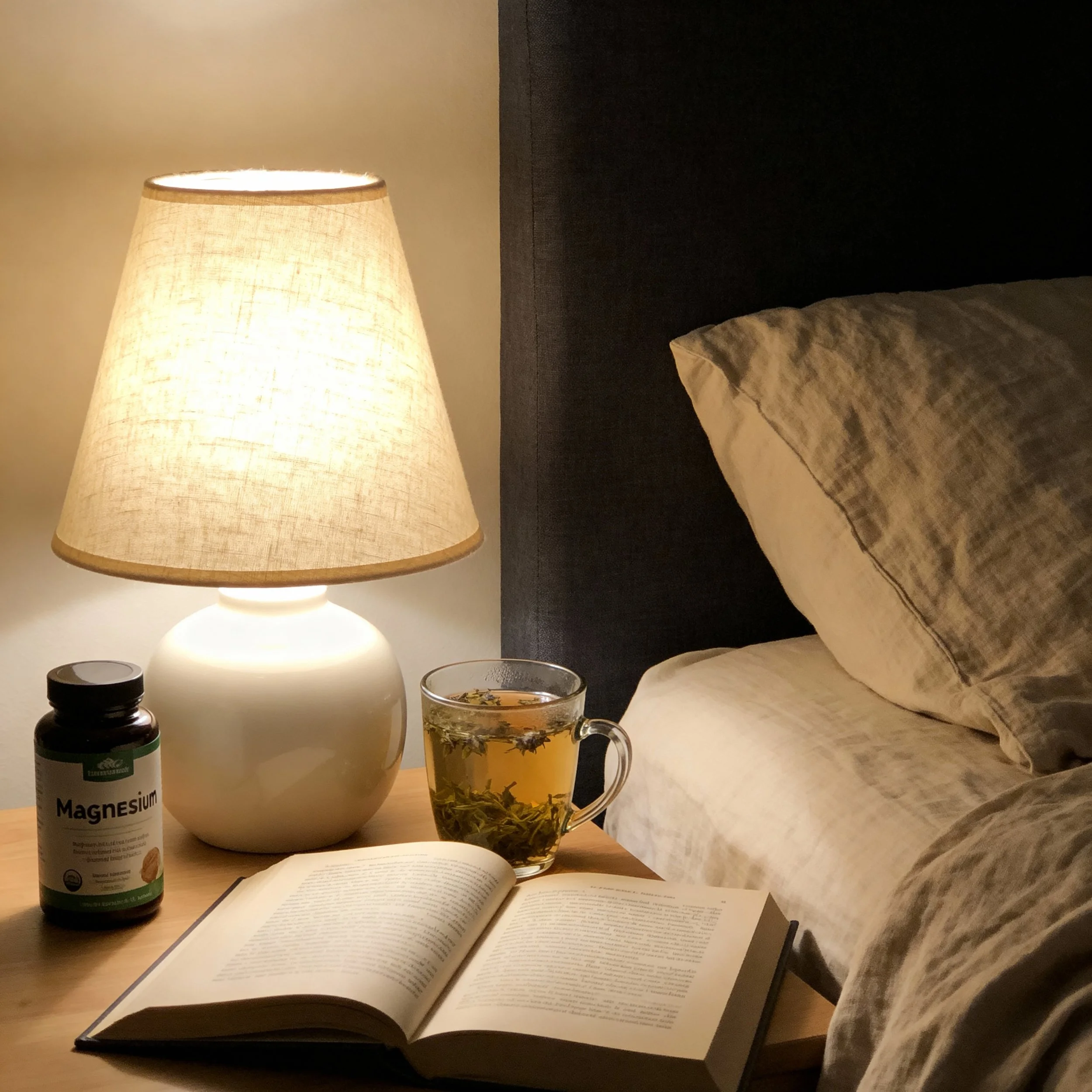
Evening rituals: I try to do the same calming routine every night - magnesium, herbal tea, light stretching, and reading a book (not scrolling).
Temperature regulation: Keeping the bedroom cool — around 65°F — makes a huge difference when hot flashes hit.
Magnesium glycinate: My go-to supplement for relaxation. I’ve used both of these: https://amzn.to/3XKednX and https://amzn.to/3MiI4Bp - it depends on what is available, but I find the Pure version to be better for me.
L-theanine capsules: Amino acid that promotes calm without sedation, helps with reducing cortisol. I have also used both of these: https://amzn.to/3Mg3nUa and https://amzn.to/3KbXZRl but I also really like the Pure, but the NOW is also great and at a better cost.
Collagen + magnesium drink mix – doubles as a soothing evening ritual. If you are taking magnesium supplements separately, you will probably not want to take more magnesium. I do take this collagen in the morning (not at night) - https://amzn.to/3LZJJvC it has a little more of a ‘thick’ taste, but you get used to it.
Mindfulness over frustration: When I wake up at 3 a.m., I no longer panic. I get up, stretch, write down what’s on my mind, or just breathe. I also practice body relaxation techniques outlined below, or may stick a warm eye mask on my eyes - this also helps with my dry eye (win win, right??). If my body decides it is awake - then I just get up and start my day. I don’t get frustrated and upset, I just accept that today may be a long day - and hope to get to sleep a bit earlier the next day. Also, there has been this viral hack that has helped those - mostly because it distracts your mind from any racing thoughts - I have tried it and it has helped sometimes and other times it did not. Maybe it will work for you - and it is a simple one with no adverse affects:
Lie down and close your eyes.
Move your eyes gently:
Side to side (look right, then left)
Up and down (look up, then down)
Roll your eyes in a circle one direction, then switch and roll the other way.
Continue until you feel drowsy or drift back to sleep.
Consistency: It’s not about one perfect night; it’s about building small habits that tell your body, “You’re safe now. You can rest.”
Progressive Muscle Relaxation (PMR) — The Soft Reset
Get comfortable — Lie down or sit somewhere you can fully relax.
Start at your feet.
Curl your toes tightly, hold for 5–7 seconds, then release for 10–15 seconds. Notice the difference between tension and relaxation.Move upward:
Calves → flex for 5 seconds, release.
Thighs → squeeze, hold, release.
Glutes → tighten, release.
Stomach → draw in slightly, release.
Hands → make fists, then relax.
Shoulders → lift to your ears, hold, release.
Face → scrunch up (eyes, jaw, forehead), then soften.
Finish with a slow exhale and focus on the feeling of heaviness and calm in your body.
Medical and Natural Options to Explore
If sleep disruption becomes chronic, there are options worth discussing with a healthcare provider:
Hormone Therapy (HRT): Estrogen, sometimes combined with progesterone, can reduce hot flashes and improve sleep in women without contraindications.
CBT-I (Cognitive Behavioral Therapy for Insomnia): A structured, non-drug approach proven to help menopausal women retrain sleep patterns.
Non-hormonal prescriptions: Certain low-dose antidepressants (like paroxetine) can ease night sweats and mild insomnia.
Herbal approaches: Black cohosh, valerian root, and ashwagandha may support relaxation, though results vary.
Melatonin: Some women benefit from small doses, but timing matters — too much or too early can worsen wakefulness.
Always worth remembering: what works for one woman may not work for another.
The Emotional Side of Sleeplessness
No one warns you how emotional sleep loss can be. It’s not just exhaustion, it’s the unraveling of something steady and familiar. It’s crying because your brain won’t stop spinning. It’s staring at the ceiling at midnight and wondering how long this phase will last.
There’s grief in it, a subtle one. Grieving the energy you once had, the predictability of your body, the version of yourself who didn’t have to think about sleep.
But there’s also connection. The moment you mention menopause, every woman has a story. A symptom. A night she thought she was losing her mind. And in that shared experience, something softens, the shame, the silence, the feeling of being “less than.”
We are not broken. We are in transition.
What Rest Looks Like Now
These days, I rarely get more than six hours of sleep. But I’ve made peace with it. Some nights I read until midnight, some nights I’m out by ten. The goal is no longer “perfect rest,” but gentle rhythm.
I protect my evenings like sacred ground. I try not to schedule late-night work or doom-scroll through social media. I let myself rest, even if it’s not sleep, and that small act of compassion feels revolutionary in a culture that prizes productivity over peace.
Because Here’s the Truth
Menopause changes everything. And yes, sleep is often the first thing it takes.
But it also gives us permission to listen, really listen, to our bodies. To notice what feels nourishing and what doesn’t. To redefine what rest means in this chapter of life.
We are learning to rest differently, not perfectly, but intentionally.
And that might be the most powerful part of the transition.
Before I wrap this up, I want to talk about one more piece that doesn’t get mentioned often - how this experience can hit even harder if you have what I lovingly call a “neuro-spicy” brain. If your mind runs fast, creative, or restless, you might already know that sleep has never come easily. Add menopause to that mix, and the results can feel like your brain has forgotten how to power down entirely.
When Your Brain Is Neuro-Spicy: The ADHD & Menopause Connection
Some of us don’t have quiet brains. We have the kind that hum — always thinking, analyzing, creating, replaying. The kind that resist “shutting down,” even when we want to rest.
It turns out, that wiring, often labeled ADHD or neurodivergent, can make menopause-related sleep issues even more complicated.
Research shows that adults with ADHD are significantly more likely to experience sleep disturbances. One 2024 study found that nearly 60% of adults with ADHD had at least one sleep disorder, most commonly delayed sleep phase (a night-owl pattern), insomnia, or restless legs syndrome. Add in the hormonal chaos of perimenopause, and it’s the perfect recipe for restless nights.
Here’s what’s happening under the surface:
Circadian rhythm mismatch: ADHD brains often operate on a delayed sleep phase, wired to be alert at night and sluggish in the morning. During perimenopause, hormonal changes further disrupt melatonin production and temperature regulation, making it even harder to align with a “normal” sleep schedule.
Dopamine and arousal systems: Both ADHD and menopause involve changes in dopamine and norepinephrine, neurotransmitters that regulate motivation, focus, and arousal. Low dopamine can make it harder to wind down at night, while fluctuating estrogen (which influences dopamine) adds another layer of unpredictability.
Cortisol overload: People with ADHD tend to have more variable cortisol rhythms, and menopause is already known for elevated nighttime cortisol. When both are in play, the brain stays stuck in “on” mode.
Emotional dysregulation: Many neurodivergent women describe feeling emotions “louder” than others. During menopause, estrogen fluctuations can heighten that sensitivity, leading to racing thoughts, frustration, or restlessness when trying to fall asleep.
Even if you’ve never been formally diagnosed with ADHD, you might recognize the patterns, creative bursts at 11 p.m., trouble switching off after screen time, a brain that does its best thinking right before bed. For neuro-spicy minds, the overlap between menopause and ADHD traits can amplify sleep disruption in ways that are both physiological and psychological.
What Helps (for the Neuro-Spicy Brain)
If your brain runs on high gear, the usual “just go to bed earlier” advice won’t cut it. These approaches can make a real difference:
Anchor your mornings: Neurodivergent brains often benefit from light therapy or a quick walk outside early in the day. Morning sunlight helps reset melatonin and dopamine cycles.
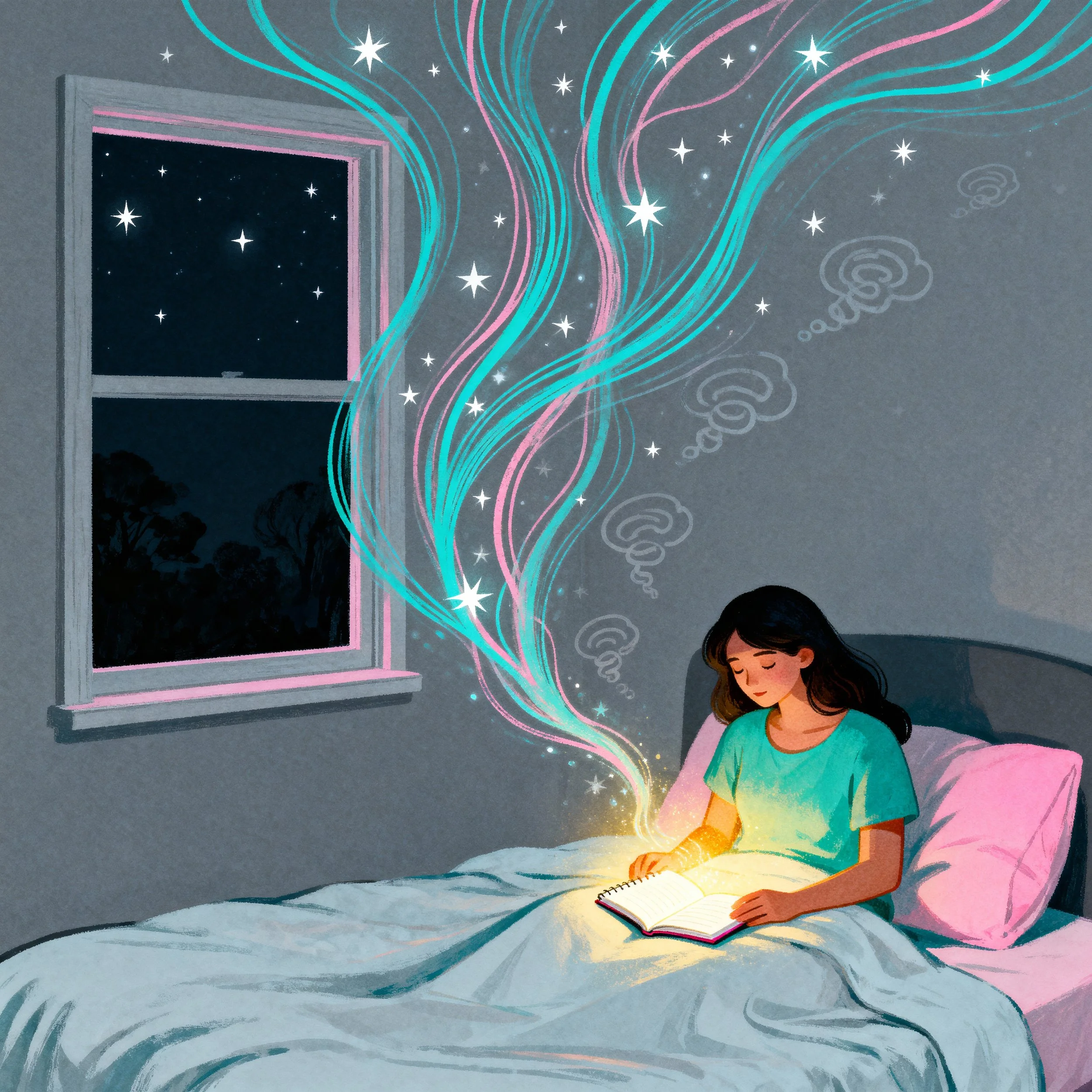
Create transition rituals: Instead of trying to “turn off,” give your brain something to turn toward. Use a 15-minute wind-down ritual: a shower, dim lights, gentle playlist, or journaling, as a cue for rest.
Brain dump before bed: Writing down thoughts, to-dos, or worries helps quiet the mental noise. It tells your brain, “You don’t have to hold this overnight.”
Temperature and texture: Many neurodivergent folks are sensitive to sensory input. Weighted blankets, cooling sheets, or gentle white noise can provide grounding sensory feedback.
Be consistent, not perfect: ADHD brains crave novelty, but sleep loves predictability. Find a few anchor habits and keep them steady, like magnesium before bed, no screens after 9, or a specific bedtime tea.
Seek integrated care: If you have ADHD and your sleep has worsened during perimenopause, talk with a healthcare provider familiar with both conditions. Hormone therapy, adjusted ADHD medications, or sleep-specific interventions (like CBT-I) can be life-changing.
Why It Matters
For many women, menopause and neurodivergence collide right when life is already full, work, caregiving, aging parents, kids, career shifts. The mix of shifting hormones and an already fast-spinning mind can make you feel unmoored. But understanding that there’s real biology behind it can be a relief.
You’re not imagining it.
You’re not lazy, unmotivated, or “too sensitive.”
Your brain is processing a massive physiological transition while running on a system that already resists rest.
That’s not failure, it’s complexity.
Additional Resources and Studies on ADHD, Sleep & Midlife
To support the neuro-spicy side of this conversation, here are some reputable studies and resources you can cite or link in your “Further Reading” section:
van der Ham M, et al. (2024). Sleep problems in adults with ADHD: Prevalences and associated comorbidities. Sleep Medicine, PMID 39354860 — Nearly 60% of adults with ADHD had at least one sleep disorder.
Surman CBH, et al. (2021). Managing Sleep in Adults with ADHD. CNS Spectrums, PMC8534229 — Overview of how sleep and circadian dysregulation interact with ADHD.
Antoniou E, et al. (2022). ADHD symptoms in females across hormonal life stages. Frontiers in Psychiatry, PMC8385721 — How hormonal transitions (puberty, menstruation, menopause) influence ADHD symptom expression.
Additude Magazine: Menopause, Hormones & ADHD in Women. (2023). additudemag.com — Accessible overview of how menopause can exacerbate ADHD symptoms.
SleepFoundation.org: ADHD and Sleep Problems: How Are They Related? — Clear explanation of sleep patterns in ADHD and circadian rhythm delay.
CHADD: Does Menopause Cause ADHD? chadd.org — How menopause can mimic or amplify ADHD-like symptoms in midlife women.
Dr. Jolene Brighten: ADHD and Menopause: How Hormones Impact Focus, Sleep & Mood. drbrighten.com — Clinical discussion on estrogen’s influence on dopamine and its link to sleep and focus.
Further Reading & Sources
Kravitz HM et al. Sleep Disturbance During the Menopausal Transition. Menopause, 2008.
Freeman EW et al. Associations of Hormones and Menopausal Transition With Sleep. J Clin Endocrinol Metab, 2015.
NAMS (North American Menopause Society): www.menopause.org
NIH: Menopause and Sleep Problems Overview
AASM: Sleep in Women Across the Lifespan
National Sleep Foundation: Why Hormones Affect Sleep in Women
Shaver JLF et al. Sleep and Menopause: A Narrative Review. Menopause Review, 2018.
