Midlife Musings: Itchy, Saggy, and What the Heck Is Happening?
I’ve always been lucky in the skin department. For most of my life, my face leaned on the oily-combo side, not great as a teenager, but it turns out that extra hydration is a blessing later in life. It kept my skin plump, smooth, and a little more resistant to wrinkles than some of my drier-skinned friends.
But now that I’m firmly in midlife, my skin has started staging a full-on rebellion. I’m not just talking about a few laugh lines or an occasional dry patch. I’m talking about itching, sagging, irritation, texture changes, and flare-ups that seem to come out of nowhere. What the heck is happening, and why does it feel like my skin suddenly gave up on me?
This post is my attempt to untangle what’s going on—both through my personal experience and the research I’ve been diving into. Spoiler alert: hormones have a lot to do with it.
The Itchy Scalp That Started It All
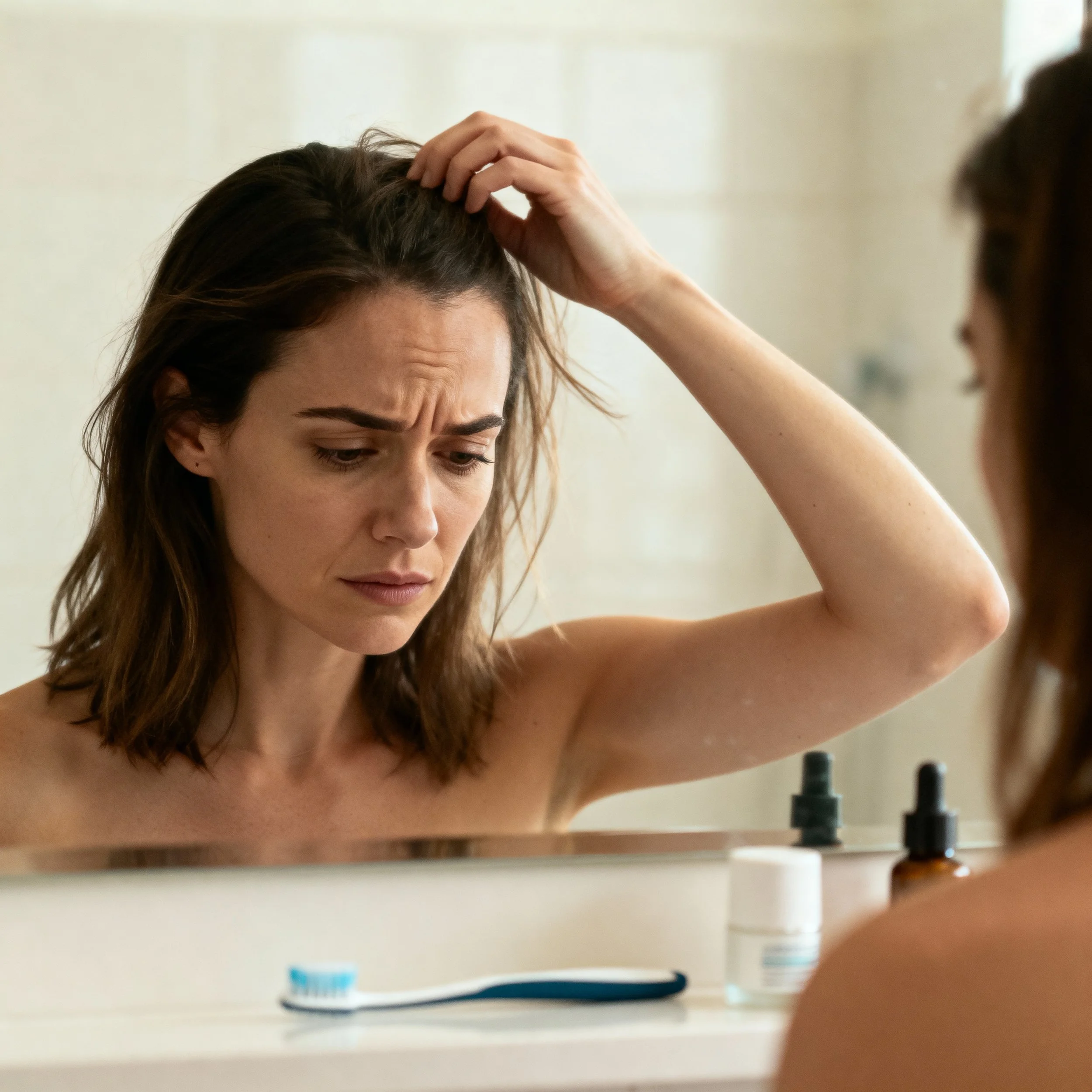
It all began with my scalp. Out of nowhere, I developed the kind of itch that could make you lose your mind. This wasn’t a casual scratch-here-and-there situation. It was the kind of itch that makes you want to claw at your head and distracts you from work, conversations, even sleep.
I finally caved and went to the doctor because no over-the-counter shampoo or conditioner made a dent. The diagnosis? A mix of eczema and “changes related to midlife skin.” Translation: something about my skin barrier wasn’t functioning the way it used to.
I was prescribed medicated shampoos and creams. I swapped my products for “cleaner” ones, sulfate-free, fragrance-free, paraben-free. I bought an exfoliating shampoo to help clear buildup. Some days the itch is tolerable. Other days it flares right back up.
And while I manage, it made me realize something: women (and men) in midlife often just cope with new symptoms instead of finding real solutions. If it’s not life-threatening, you’re told to “just deal.” But constant itchiness is exhausting, even if it’s not considered “serious.”
When the Itch Spread Beyond My Scalp
As if that weren’t enough, the irritation started spreading. Random patches of red, hive-like bumps appeared on my arms, legs, or torso. Sometimes they’d fade within a day, only to come back in a new spot. Creams helped temporarily, but the cycle continued.
I did the usual medical merry-go-round: allergy tests, elimination diets, switching detergents, swapping lotions. I filled prescriptions. I stocked up on every “soothing” product I could find. Still, the itch persisted.
Then it reached my face. And that’s where I really started to panic.
The Scary Face Flare-Ups
When it spread to my eyelids, I knew this was no longer just a nuisance. My eyelids swelled, turned red, and itched like crazy. At first, it was an occasional flare. Now it’s edging toward a regular occurrence. Some mornings I wake up looking like I’ve lost a boxing match.
The skin around our eyes is the thinnest and most delicate on the body, so anything happening there feels ten times worse. And of course, getting in to see a dermatologist these days is a waiting game—it can take weeks or months just for an appointment. So, I’ve been doing my best with gentle creams, cold compresses, and crossing my fingers until my next visit.
Enter Menopause: The Hormone-Skin Connection
Through all this trial and error, one thing kept popping up in my research: perimenopause and menopause might be driving a lot of these changes.
When most of us think about menopause, we think of hot flashes, night sweats, or mood swings. But estrogen also plays a huge role in skin health. It keeps our skin hydrated, firm, and resilient. When estrogen levels start to drop, everything changes.
There’s even a term for the itching: menopausal pruritus. Basically, the sudden onset of midlife itchiness isn’t random—it’s one of many symptoms linked to declining estrogen (Menopause, skin and common dermatoses, Part 2).
Here’s how estrogen impacts the skin and why its absence causes so much chaos:
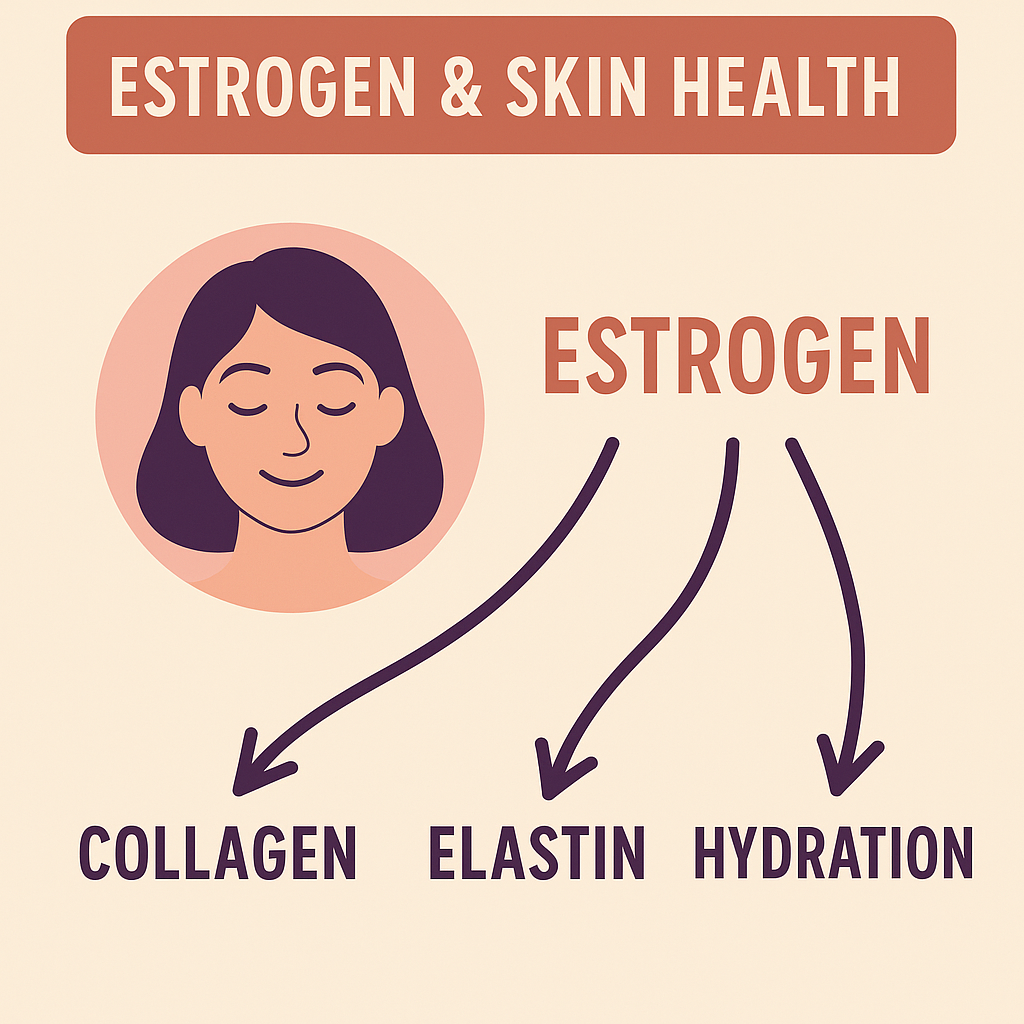
Collagen Collapse: Estrogen helps stimulate collagen production, the protein that keeps skin firm and structured. In the first five years after menopause, collagen levels can drop by as much as 30% (Shuster et al., British Journal of Dermatology).
Elastin Breakdown: Elastin is what lets your skin bounce back after movement. Without estrogen, elastin fibers weaken, making skin loose or crepey (Dermatological Changes During Menopause and HRT, Cosmetics Journal).
Hydration Loss: Estrogen also supports natural oils and hyaluronic acid, which keep the skin plump and moist. With less of it, skin becomes dry, flaky, and more sensitive to irritation (Estrogen-deficient skin: The role of topical therapy).
Fat Shifts: Estrogen influences fat distribution. Without it, fat pads in the face shrink while abdominal fat increases. That’s why the face can look hollowed in some areas and puffy in others (Menopause, skin and common dermatoses, Part 2).
In other words: it’s not just in your head. The changes are biological.
My Skin Texture: From Smooth to “Chicken Skin”
Beyond the itching, my skin texture has been shifting. My pores look bigger. My skin feels looser. Even though I’m still working out and keeping my body strong, my skin doesn’t cling to muscle the way it used to.
I jokingly call it my “chicken skin.” When you’ve got larger pores and the skin loosens, it can look bumpy and uneven, almost like the skin of a plucked bird. It’s not exactly a confidence booster when you catch yourself in the mirror.
Gravity, of course, isn’t helping. But the real culprit is the loss of structural proteins and hydration inside the skin.
Coping Strategies That Help (Sort Of)
I wish I had a magic solution. Right now, I’m still experimenting and trying to find what works. But here are the things that help me at least manage:
Thick, fragrance-free emollient creams applied after showers.
Scalp-friendly shampoos that soothe instead of strip.
Avoiding harsh chemicals in detergents, soaps, and cosmetics.
Short, lukewarm showers instead of long, hot ones that strip natural oils.
Colloidal oatmeal lotions for calming inflamed patches.
Cold compresses when the eyelids swell.
Do these fix the root problem? No. But they make life more comfortable while I wait for answers.
What the Research Suggests
Because I like to understand the why, I’ve also been reading up on evidence-based approaches. Here are a few areas researchers highlight:
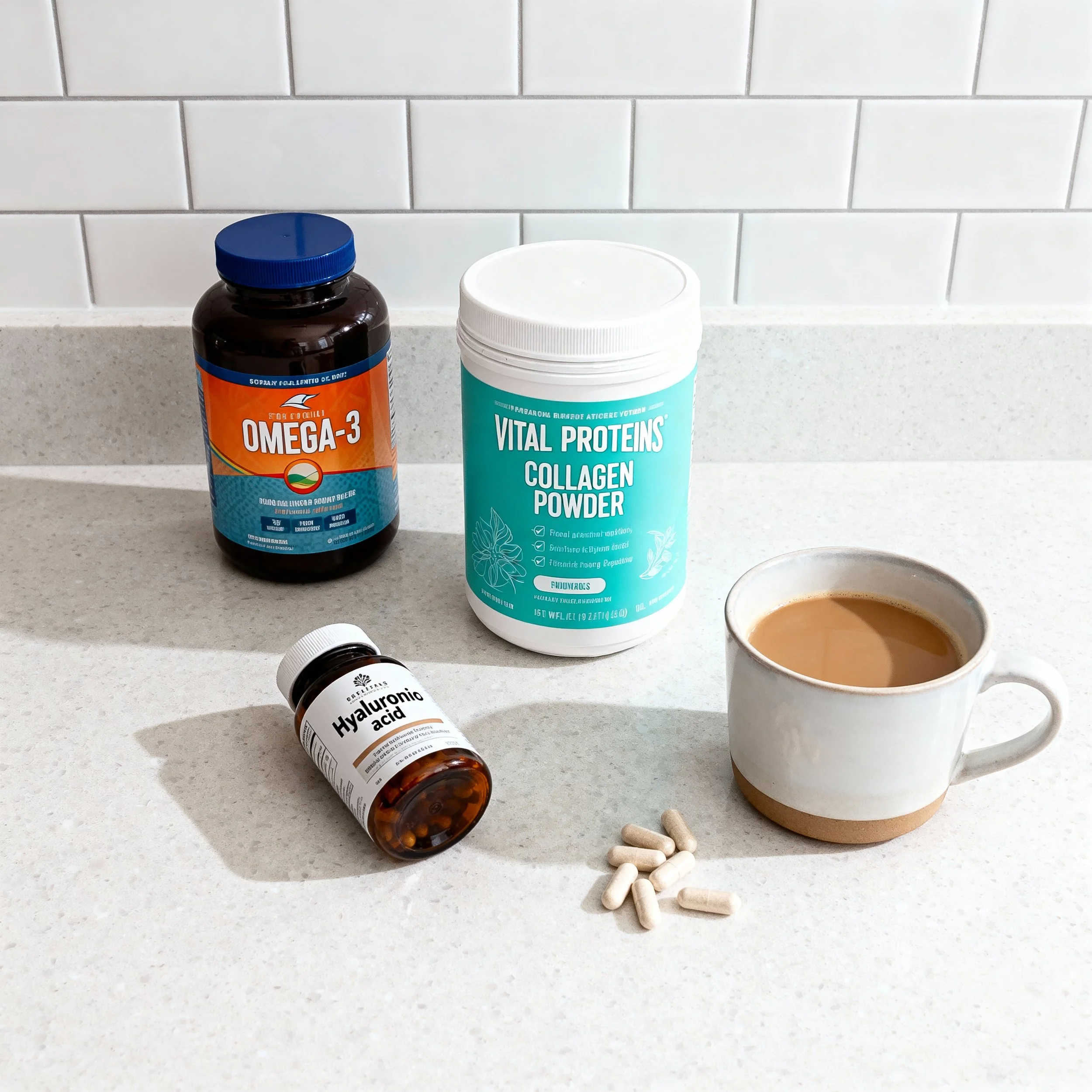
Collagen Peptides (oral supplements): May improve hydration, elasticity, and wrinkle depth within 8–12 weeks (Journal of Drugs in Dermatology, 2019).
Omega-3s: Reduce inflammation and support the skin barrier, which helps with dryness and itching (Journal of Clinical Biochemistry & Nutrition).
Hyaluronic Acid (oral or topical): Shown to plump and hydrate skin (Nutrients, 2017).
Evening Primrose Oil / Starflower Oil: Contains GLA, which supports elasticity and moisture (International Journal of Cosmetic Science).
Phytoestrogens (soy isoflavones, red clover): Weak plant-based estrogens that may help with skin thickness and dryness (Clinics, 2012).
Of course, not every supplement works for everyone, and you should always check with your doctor before starting anything new.
The Mystery of Midlife Brown Spots
Another change I’ve noticed is the sudden appearance of brown spots in places I never expected - like my legs. These are often called age spots or solar lentigines, and they arise from cumulative sun damage over time (not from your liver, despite the name). Studies show that pigmentation changes like these are common features of aging skin, especially in sun-exposed areas. PMC+2PMC+2 Estrogen decline may play a subtler role, because reduced hormone levels can impair skin repair and antioxidant defenses, making it harder to recover from UV stress. SpringerLink+2Taylor & Francis Online+2 Though they’re usually harmless, I still find them annoying. Daily SPF, protective clothing, and occasional treatments like retinoids or depigmentation agents can help minimize them over time.
What Can Help with Brown Spots
While age spots (solar lentigines) are usually harmless, there are treatments that can reduce their appearance if they bother you. Dermatologists often recommend:
Topical retinoids or retinol creams – help speed up skin cell turnover and fade pigmentation over time (AAD – Retinoids for Skin).
Hydroquinone or other lightening agents – prescription-strength skin lighteners can reduce melanin in dark spots, though they should be used carefully and under medical guidance.
Chemical peels & microdermabrasion – exfoliation treatments that remove damaged outer layers of skin and promote more even tone (Mayo Clinic – Age Spots).
Laser therapy or IPL (intense pulsed light) – effective for stubborn pigmentation, targeting melanin directly and breaking up dark spots.
Of course, prevention is key: broad-spectrum sunscreen (SPF 30+) daily is the single most effective way to keep new spots from forming (American Academy of Dermatology).
Beyond Creams: Lifestyle Still Matters
Even with the best products, lifestyle plays a huge role in how our skin weathers this stage of life:
Sun Protection: SPF 30+ every single day. UV rays accelerate collagen breakdown, and menopause doesn’t give you a free pass (American Academy of Dermatology).
Stress Management: Cortisol (stress hormone) actually breaks down collagen. High stress = faster aging (Harvard Health).
Sleep: This is when your skin repairs itself. Skimping on sleep accelerates dryness and dullness.
Hydration + Nutrition: Drinking water, eating Omega-3s, and cutting inflammatory foods really does show up on your skin.
The Bottom Line
Midlife skin changes are real, and they’re not just “a little dryness.” For me, it’s been itchy scalp flare-ups, random rashes, and sagging skin that feels unfamiliar. For others, it might show up differently. But the common thread is that estrogen plays a starring role in skin health, and when it leaves the stage, we feel the effects everywhere.
I’m still on this journey—testing creams, booking derm appointments, and diving into research. But one thing I’ve learned is this: midlife skin isn’t the end of the story. With the right care, supplements, and a little patience, we can support our skin through this transition.
And if nothing else, we can remind ourselves that this is natural. Our skin is just catching up with the changes happening inside.
A Note on HRT
Since I’m on an HRT patch and progesterone pill, I feel like it’s important to share this caveat: hormone therapy can help ease some of the skin changes of menopause, but it’s not a magic eraser. HRT supports collagen, hydration, and even skin thickness (Cleveland Clinic – Hormone Therapy and Skin). But even with it, I still notice itching, dryness, and sagging. In other words, HRT can be a powerful tool, but it doesn’t rewind the clock. You still need a good skincare routine, gentle lifestyle habits, and patience with your body. And of course - every woman’s health history is different, so always discuss risks and benefits with your doctor before starting hormone therapy.
What’s Helping Me Right Now
Everyone’s skin is different, but I’ll share what I’ve been using in case it helps you build your own toolkit:
(Heads up: affiliate link! Your clicks help keep the pups spoiled + coffee warm 🐾☕💛)
Moisturizers: I rotate between CeraVe Moisturizing Cream and Vanicream Moisturizing Cream. Both are thick, fragrance-free, and keep my skin calm when it wants to flare up.
Scalp Care: Once a week I use an exfoliating shampoo to clear buildup, and if the itching gets bad, I switch to a zinc-based dandruff shampoo or a therapeutic shampoo.
Body Relief: For those random itchy patches, I reach for Aveeno Colloidal Oatmeal Lotion, which soothes almost instantly.
Facial Products: I use La Roche-Posay for most of my facial products, like this hyaluronic serum, moisturizing sunscreen, facial wash and body lotion when I am rotating them.
Supplements: I rotate between marine collagen peptides and bovine collagen peptides for skin elasticity and strength, and I’ve added HydroEye Dry Eye supplements for Omega-3s and GLA, which seem to help with both my eyes and overall dryness. I also take hyaluronic acid capsules, which give my skin an extra boost of hydration from the inside out.
Lifestyle Swaps: I’ve traded long hot showers for lukewarm ones, swapped to fragrance-free detergents, and sleep on my favorite Quince bamboo sheets to keep my skin calmer overnight.
Resources & Further Reading
For anyone wanting to dig deeper into the science:
American Academy of Dermatology – Menopause and Your Skin
Cleveland Clinic – Menopause & Itchy Skin
PubMed – Collagen Peptide Review
Harvard Health – Menopause and Your Skin
Estrogen-Deficient Skin: The Role of Topical Therapy (PMC Article) – Read Here
