2026 Reset: Finding My Center in a Volatile World - Stress, Hormones, and the Art of Pivoting
I don’t know about you, but I started this year with such high hopes. I had my intentions set, shared my blog on what I had intended for the year and after a restful December break, I felt ready to conquer my 2026 reset goals. Then, January happened.
There have only been a few moments in my life where I felt that level of pure, visceral shock regarding national events, moments that fundamentally shift your sense of safety. For me, those markers are 9/11, January 6th, and now this. When Renee Good was unalived by those representing our government, I simply didn’t know how to respond.
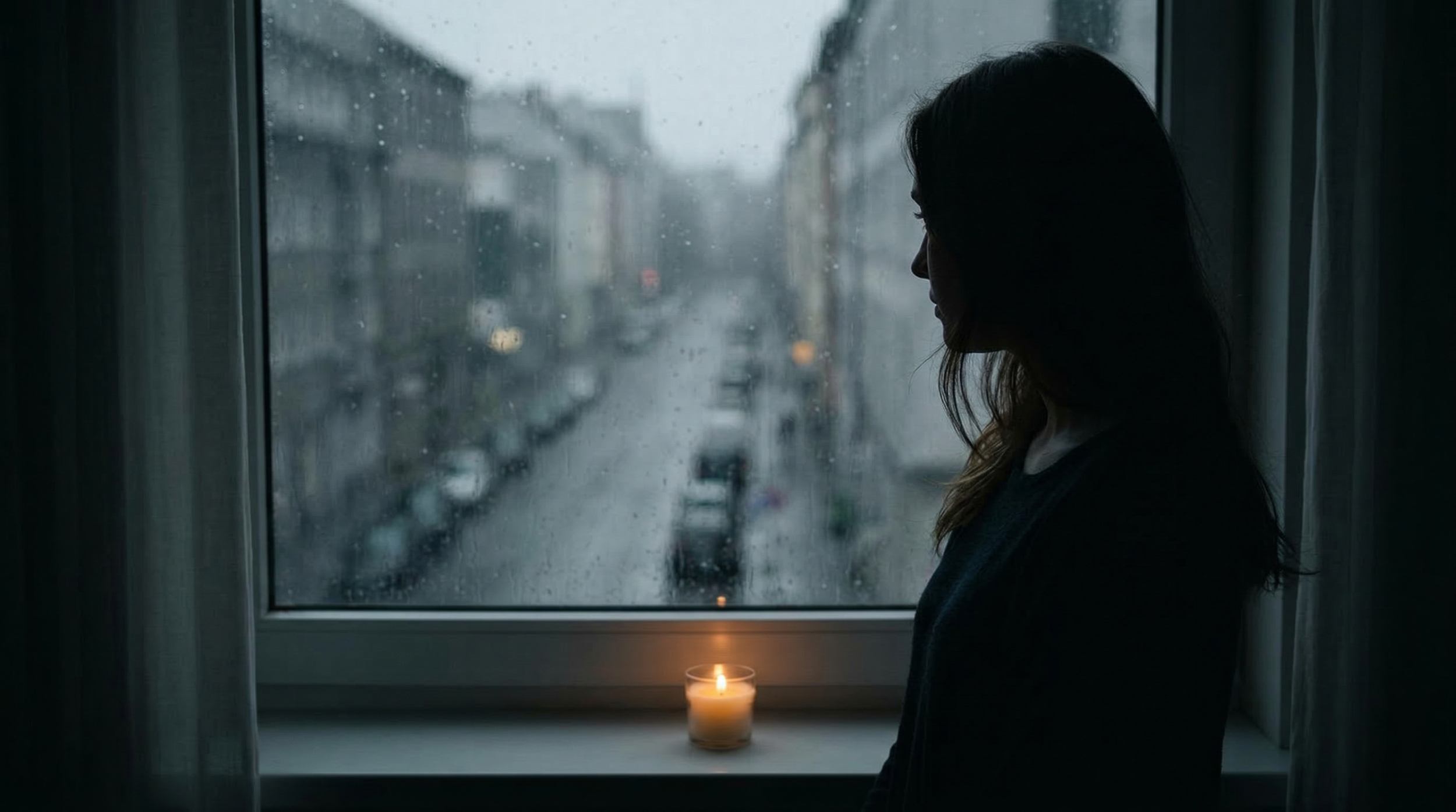
I spiraled into a very dark place. My capacity shrank to the bare minimum: going to work to ensure the dogs and I had food and shelter, and desperately trying to find some measure of control. I was scared for my friends, my family, and the future of our country. I was a mess.
The Stress-Dopamine Loop: Why We Seek "Hits" in Chaos
When the world feels like it’s collapsing, the human brain goes into a frantic search for dopamine. Dopamine isn't just about "pleasure"; it’s about motivation and reward. When we are under extreme, chronic stress, our natural dopamine levels can dip, leaving us feeling "under-stimulated" or emotionally numb.
To reach a level of "calm" or focus during a crisis, the brain often requires a higher "hit" of stimulation, through urgency, novelty, or high interest, just to feel like we are functioning at a normal baseline. When external chaos hits, we don't just feel stressed; we feel a biological gap that we instinctively try to fill.
From Panic to Projects: The Safety vs. Control Paradox
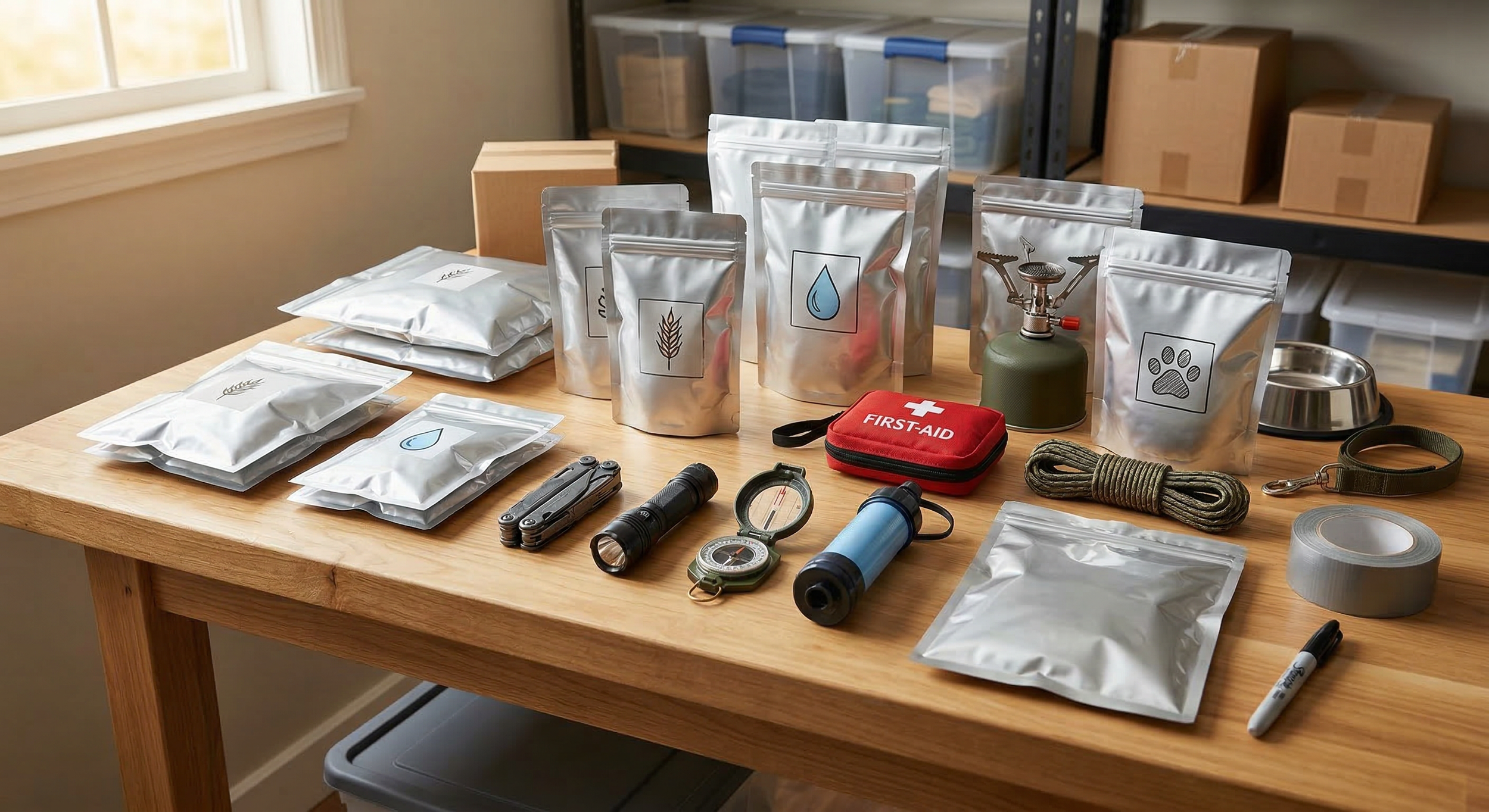
For me, this manifested as a deep dive into doomsday prepping. It wasn't just about the "stuff"; it was about the process. While receiving packages didn't necessarily provide a sensory thrill, the research was a lifeline. I went down a rabbit hole of learning how to package items for long-term storage and what specific equipment I would need for both myself and my dogs.
This became a massive mini-home project. It gave me a sense of agency when world events felt completely out of my hands. If I hadn't leaned into this, I would have ended the day completely exhausted with zero motivation for anything. Instead, this "prepping" led to a secondary project: internally reorganizing my life. I started cleaning out items I no longer needed and figuring out how to store my new supplies efficiently. It was a way to do something for me when I desperately needed to feel capable.
Creative Connection: Dopamine Dressing
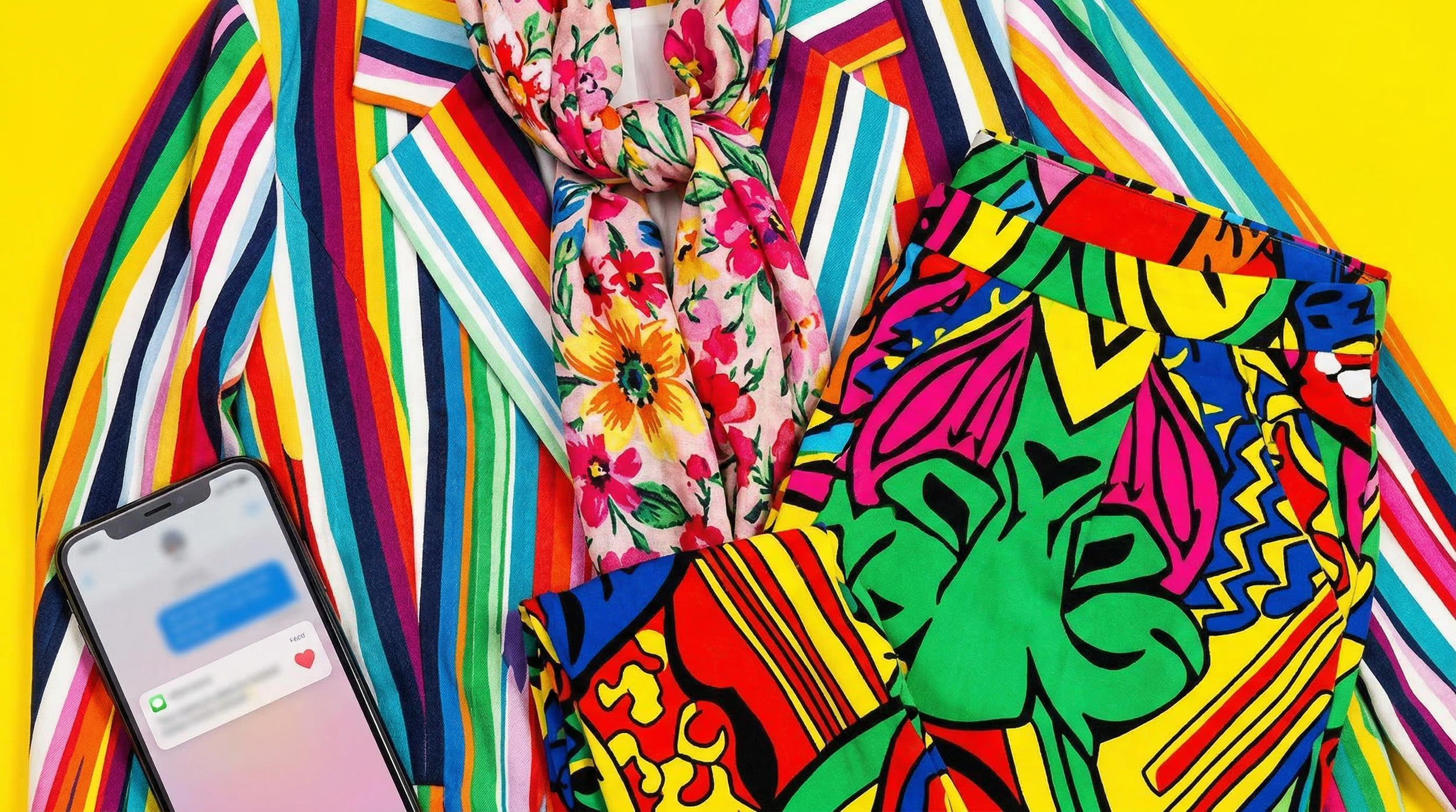
Another method that helped me during this time was Dopamine Dressing. I started following an influencer who provides "outfit formulas," and it completely unlocked my creativity. I realized that the current trend is that things don't have to "match" in the traditional sense - I’ve fallen in love with mixing patterns and textures I never would have tried before.
The best part? I’m doing this with my sisters. We send each other pictures of our outfits based on the daily formulas. While most of my looks are for the office, I’ve started leveraging these formulas for the weekend too. It’s been a great way to build creativity when I’m going out to see friends and my "house comfies" just aren't appropriate. It turned a solitary struggle into a shared moment of joy.
The Hormonal Wall and the HRT Shortage
To make matters more complicated, my hormones weren't doing me any favors. During this period, my HRT (Hormone Replacement Therapy) medication went on backorder. It’s a bittersweet reality: more women are finally getting the support they need with HRT, but pharmaceutical companies haven't caught up with the demand yet.
When my hormones were lagging, I felt like any "masking" or coping mechanisms I usually rely on were non-existent. Estrogen plays a massive role in how our brains process dopamine and regulate mood. Without that chemical support, the "wall" of daily life becomes impenetrable. I’ve since started a couple of additional medications to support these hormonal changes and I’m finally seeing results, which helped me get through this last month. But for a while, I was just "existing."
The Movement Shift: Finding Accountability Over Motivation
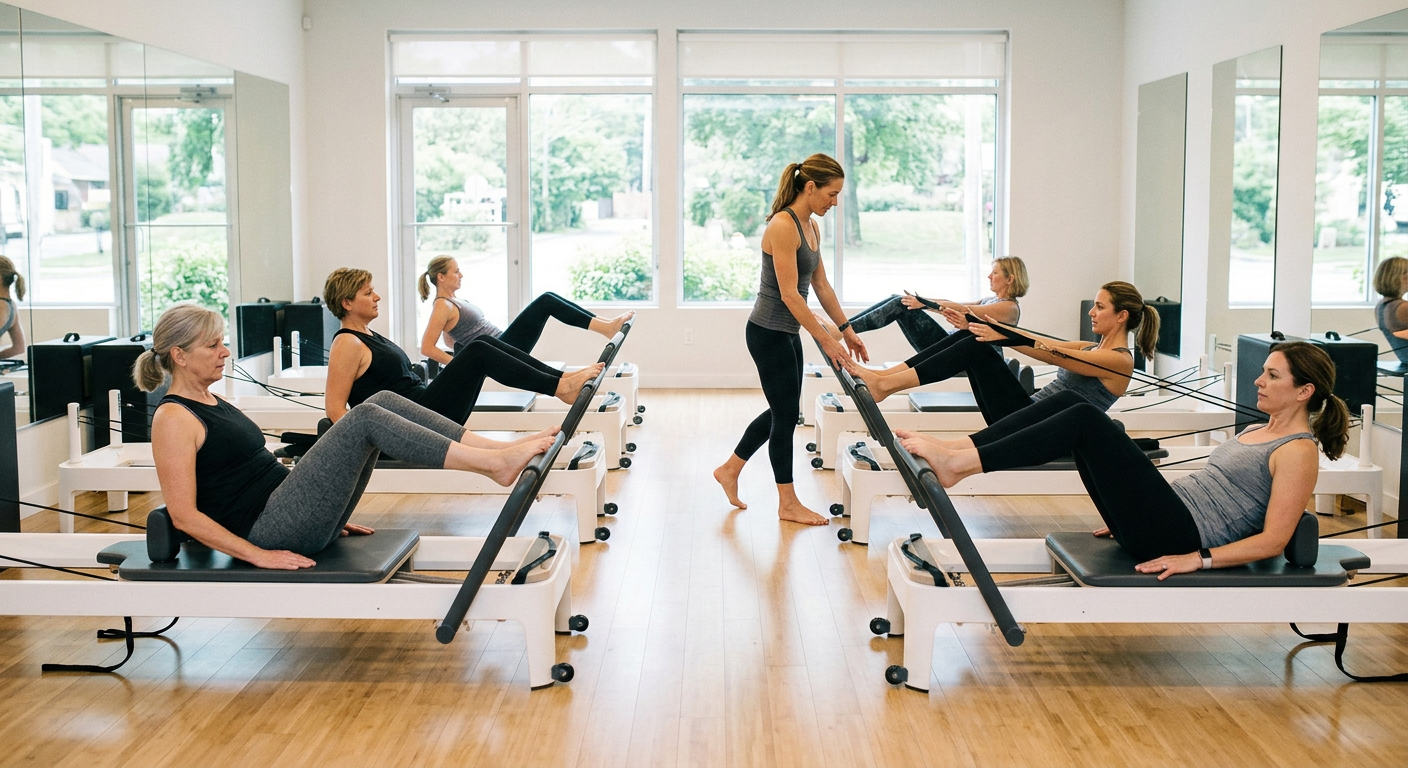
One more thing I did that I want to share, because it felt like a big deal, was quitting my personal trainer. Now, before you raise an eyebrow, let me explain. I have had a gym membership for over 20 years. I actually used it consistently for about 10 of those years, but somewhere along the way, I kept paying for it without really showing up. When I was in that state of paralysis, I realized that self-motivation alone wasn't going to cut it. I needed structure. I needed a class, a time slot, a room full of people, and an instructor who expected me to be there.
So I signed up for Reformer Pilates. I specifically chose it because I wanted to focus on my core and build strength in the muscles that support my joints, something sustainable and intentional, not just "burning calories." I took my first class and I absolutely loved it. Can I walk properly right now? Barely. Do I care? Not even a little. I cannot wait to go back.
Here's what I've learned: when your brain is in survival mode, willpower is one of the first things to go. You don't need more motivation, you need a system that removes the decision entirely. A class, a community, or a commitment to someone other than yourself can be the bridge between paralysis and progress.
From Paralysis to "The Productive Mad"
My version of paralysis wasn't laying in the dark all day; it was doing the bare minimum, doomscrolling, avoiding social interaction, and having zero interest in anything beyond survival. I gave myself time to be "bummed out," but then, I got mad.
Anger is a high-arousal emotion that floods the brain with norepinephrine and dopamine. For many of us, it can act as a "jumpstart" out of a depressive slump. I allowed myself to feel the weight of the world, and eventually, that fear and sadness turned into a logical fire… a desire to fight for what is right.
However, that surge of energy is a double-edged sword. Once my brain "woke up," it stayed in a high-stimulation seeking mode, which led directly to my shopping binge. My brain was finally "online," but it was still hungry for more dopamine to keep the engine running.
Strategies for Maintaining Peace (For Everyone)
Whether you are navigating a crisis or just the daily grind, protecting your peace is essential. Here are some methods I’m leaning into:
Identify Your "Dopamine Menu": Instead of default doomscrolling, create a list of "low-cost" dopamine hits. This could be a 10-minute walk, a specific playlist, or a creative hobby.
The 24-Hour Rule (or Better Yet, the One-Week Rule): The 24-hour rule is a popular method for curbing impulsive "stress-shopping," but honestly, I prefer the one-week rule. Put the items in your cart and walk away for a full week. If you still want it after seven days, it may be worth it. More often than not, the "hunt" and the research provided the dopamine hit you needed, and the item itself becomes an afterthought.
Move Your Body with Accountability: When motivation is low, self-directed exercise is often the first thing to go. Instead of relying on willpower, find a structured class, a workout buddy, or a scheduled commitment that removes the decision entirely. Whether it is a reformer pilates class, a yoga session, or a group fitness class, the accountability of showing up for others can be the bridge between paralysis and progress. Research also shows that even moderate movement boosts dopamine and serotonin levels, making it one of the most effective and free tools for managing stress. You can read more about the science behind exercise and mood at Harvard Health.
Somatic Grounding: When the news cycle becomes too much, move from your head into your body. Simple breathwork or "grounding" (identifying 5 things you see, 4 you feel, etc.) can lower cortisol levels. You can find guided exercises on Healthline.
Limit Your News Intake with "Information Boundaries": Research from the American Psychological Association consistently shows that limiting news consumption to specific, intentional windows, like 20-30 minutes once or twice a day, significantly reduces anxiety and cortisol levels. Constant exposure to distressing news keeps your nervous system in a state of chronic stress. Try setting a specific "news window" and closing all tabs outside of it. Read more at the APA.
Social Connection as Medicine: Studies from Harvard's longest-running happiness study show that close relationships are the single greatest predictor of wellbeing, even more than wealth or fame. When we are in a state of stress or paralysis, isolation feels natural but actually deepens the dopamine gap. Even a short phone call, a text thread with your sisters, or a coffee date can trigger oxytocin and serotonin, which work alongside dopamine to stabilize mood.
Sleep as a Reset Button: Research published by the National Institutes of Health shows that sleep deprivation directly reduces dopamine receptor availability, meaning the less you sleep, the harder it is for your brain to feel rewarded or motivated. Protecting your sleep during high-stress periods is not a luxury, it is a biological necessity. Even a consistent bedtime can make a measurable difference.
Journaling and "Expressive Writing": A landmark study by psychologist James Pennebaker found that writing about stressful or traumatic events for just 15-20 minutes a day over four days led to measurable improvements in mood, immune function, and stress levels. It doesn't have to be polished or public. It just has to be honest. You can read more about expressive writing research at Psychology Today.
Sunlight and Circadian Rhythm Reset: Research from Stanford neuroscientist Andrew Huberman shows that getting natural sunlight within the first 30-60 minutes of waking up regulates cortisol, boosts serotonin, and sets your circadian rhythm for better sleep and mood throughout the day. It is one of the simplest, most accessible tools available and it costs nothing.
Understanding the Brain: For those interested in the science of how our brains process these "hits," Psychology Today offers a clear breakdown of dopamine's role in motivation and reward.
Taking Stock and Moving Forward
I’m finally starting to feel back in sync. I’ve realized that while I was ambitious about my goals, I also had to learn how my coping skills and hormones react to extreme stress. My "prepping" and shopping spree cost a significant amount of money, so my focus now is reducing spending and paying down debt.
I’m not pressuring myself. I’m celebrating the small wins - like realizing I had enough airline miles and hotel points to book my local trips for almost free.
The world is still volatile, and I don’t know how I’ll react to the next wave. But for now, I’m taking a breath. I’m taking stock of what I’m grateful for and sending love out into the world. If you’re feeling this too, know that I see you. We’re fighting the good fight, but we have to find our peace along the way.
Deep breath. We’ve got this.
